 Image 1 of 1
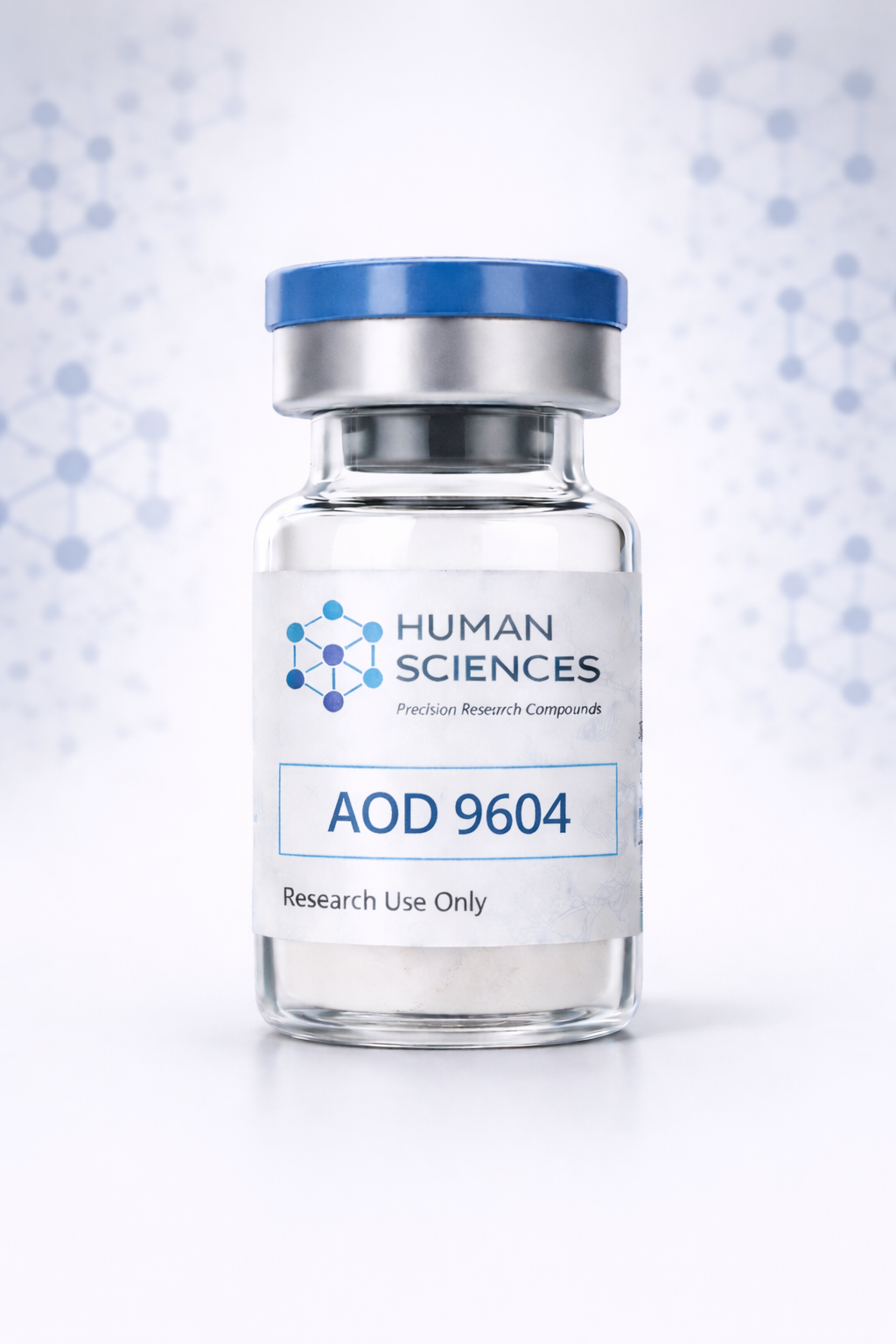
AOD-9604 Is A Synthetic Fragment Of Human Growth Hormone (HGH 176–191) Commonly Used In Research Exploring Lipid-Metabolism Signaling, Adipocyte Pathways, And Energy-Regulation Models. For Research Use Only, Not For Human Or Veterinary Use.
Description
AOD-9604 Is A Laboratory-Engineered Peptide Corresponding To The 176–191 Amino Acid Region Of Human Growth Hormone, Developed To Isolate The Metabolic Signaling Aspects Of The Parent Hormone. Researchers Frequently Use This Fragment To Investigate Pathways Related To Adipocyte Behavior And Lipid Turnover In Controlled Experimental Systems.
Early Biochemical Mapping Identified The 176–191 Region As The Portion Of HGH Associated With Lipolytic And Anti-Lipogenic Activity. As A Result, AOD-9604 Is Often Studied In Models Seeking To Differentiate Metabolic GH Responses From Growth-Promoting Or IGF-1–Linked Mechanisms.
In Vitro And Animal Studies Have Examined How This Fragment May Influence Lipolysis, Energy Expenditure, And Triglyceride Mobilization Within Adipose Tissue. Research Also Includes Examinations Of Β-Adrenergic–Related Signaling And Downstream Metabolic Gene Expression As Part Of Broader Lipid-Regulation Pathways.
Because AOD-9604 Does Not Fully Activate The Standard GH Receptor–IGF-1 Cascade, It Is Frequently Explored As A Selective Metabolic-Pathway Model Rather Than A Systemic Growth-Hormone Analog. This Distinction Has Made It A Recurring Tool For Studies Evaluating GH-Fragment Specificity In Adipocyte And Metabolic Environments.
Additional Exploratory Research Has Utilized AOD-9604 In Cartilage, Connective-Tissue, And Cellular-Repair Models, Where Investigators Assess Structural Responses, Collagen Behavior, And General Regenerative Signaling Markers. These Investigations Remain Preclinical And Are Used To Better Understand Peptide-Based Modulation Of Tissue Pathways.
AOD-9604 Has Also Appeared In Studies Focused On Inflammation, Oxidative Stress Models, And Cellular Resilience Under Challenging Conditions. These Research Lines Highlight The Peptide’s Role As A Multipath Way Investigative Tool Rather Than An Approved Therapeutic Agent.
Across The Literature, AOD-9604 Is Positioned Strictly As A Research Chemical Intended For Laboratory Analysis Of Metabolic, Regenerative, And Signaling Pathways. It Is Not Approved For Medical Use, And Its Applications Are Limited To Controlled Scientific Environments. For Research Use Only, Not For Human Or Veterinary Use.
AOD-9604 Is A Synthetic Fragment Of Human Growth Hormone (HGH 176–191) Commonly Used In Research Exploring Lipid-Metabolism Signaling, Adipocyte Pathways, And Energy-Regulation Models. For Research Use Only, Not For Human Or Veterinary Use.
Description
AOD-9604 Is A Laboratory-Engineered Peptide Corresponding To The 176–191 Amino Acid Region Of Human Growth Hormone, Developed To Isolate The Metabolic Signaling Aspects Of The Parent Hormone. Researchers Frequently Use This Fragment To Investigate Pathways Related To Adipocyte Behavior And Lipid Turnover In Controlled Experimental Systems.
Early Biochemical Mapping Identified The 176–191 Region As The Portion Of HGH Associated With Lipolytic And Anti-Lipogenic Activity. As A Result, AOD-9604 Is Often Studied In Models Seeking To Differentiate Metabolic GH Responses From Growth-Promoting Or IGF-1–Linked Mechanisms.
In Vitro And Animal Studies Have Examined How This Fragment May Influence Lipolysis, Energy Expenditure, And Triglyceride Mobilization Within Adipose Tissue. Research Also Includes Examinations Of Β-Adrenergic–Related Signaling And Downstream Metabolic Gene Expression As Part Of Broader Lipid-Regulation Pathways.
Because AOD-9604 Does Not Fully Activate The Standard GH Receptor–IGF-1 Cascade, It Is Frequently Explored As A Selective Metabolic-Pathway Model Rather Than A Systemic Growth-Hormone Analog. This Distinction Has Made It A Recurring Tool For Studies Evaluating GH-Fragment Specificity In Adipocyte And Metabolic Environments.
Additional Exploratory Research Has Utilized AOD-9604 In Cartilage, Connective-Tissue, And Cellular-Repair Models, Where Investigators Assess Structural Responses, Collagen Behavior, And General Regenerative Signaling Markers. These Investigations Remain Preclinical And Are Used To Better Understand Peptide-Based Modulation Of Tissue Pathways.
AOD-9604 Has Also Appeared In Studies Focused On Inflammation, Oxidative Stress Models, And Cellular Resilience Under Challenging Conditions. These Research Lines Highlight The Peptide’s Role As A Multipath Way Investigative Tool Rather Than An Approved Therapeutic Agent.
Across The Literature, AOD-9604 Is Positioned Strictly As A Research Chemical Intended For Laboratory Analysis Of Metabolic, Regenerative, And Signaling Pathways. It Is Not Approved For Medical Use, And Its Applications Are Limited To Controlled Scientific Environments. For Research Use Only, Not For Human Or Veterinary Use.